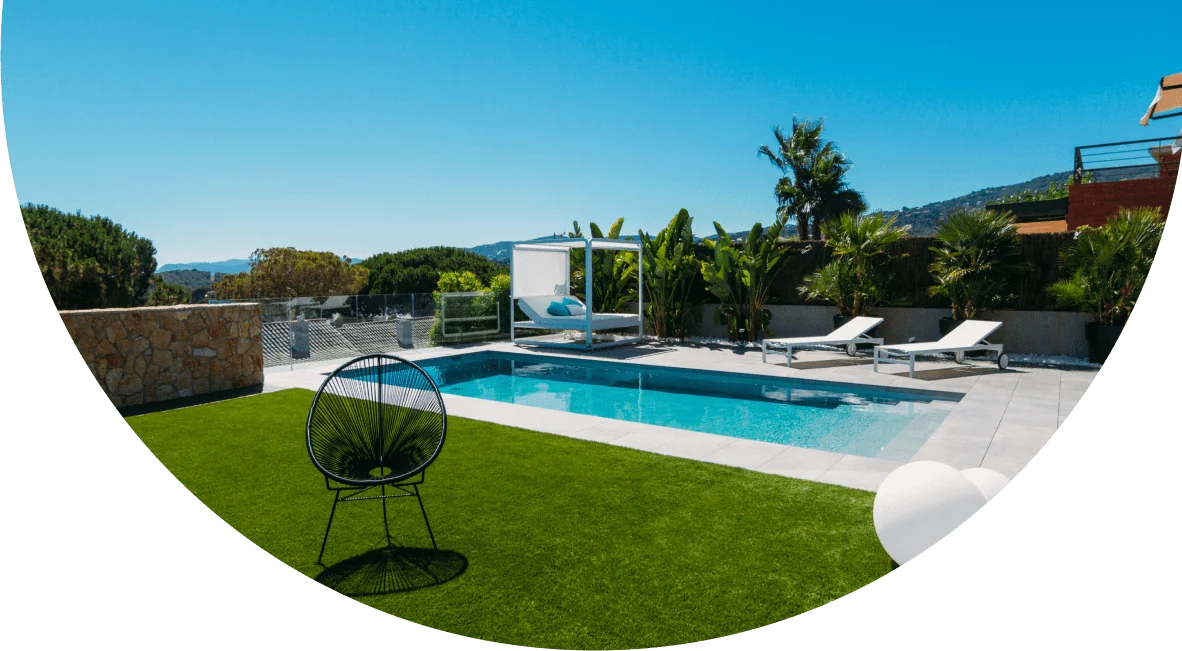

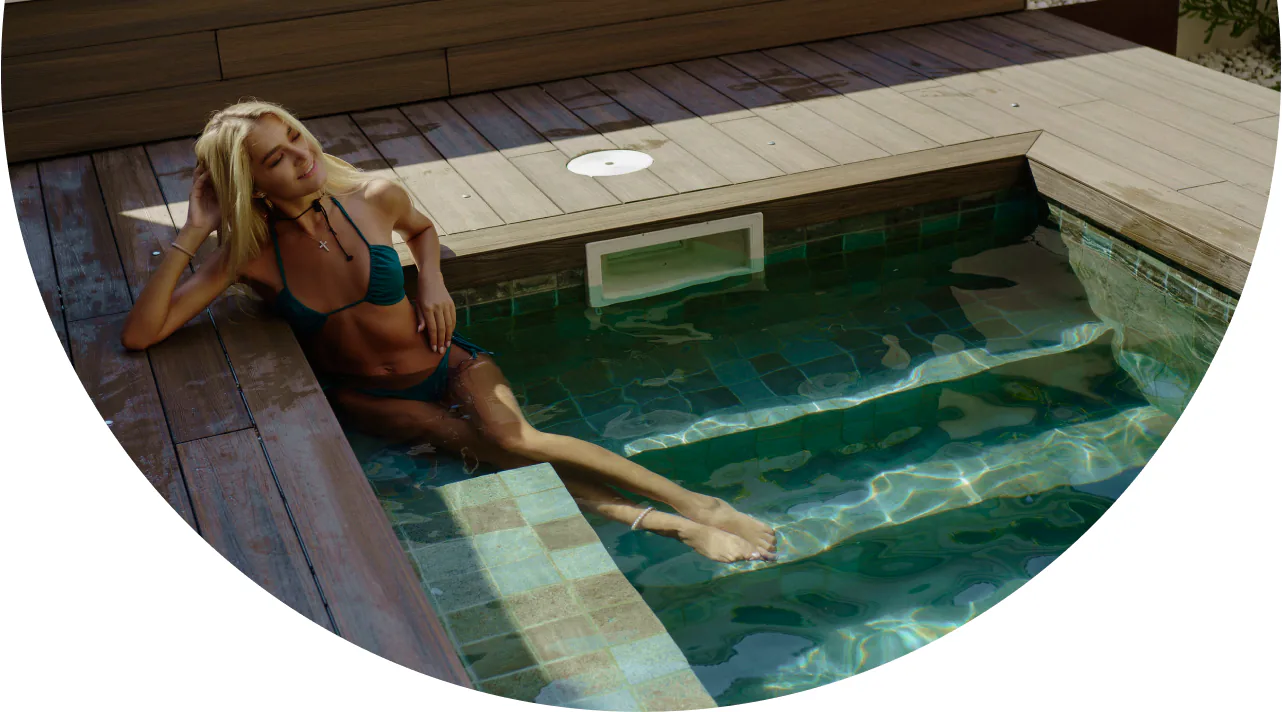
Pool paving is exposed to water, sun, treatment chemicals and temperature changes. The selection must balance safety, barefoot comfort, durability and integration with the garden.
Slip resistance is only the beginning
The surface needs grip when wet and suitable certification for its intended use. Format matters too: poorly resolved joints, transitions, steps and edges can create trip hazards even when the material has a strong slip-resistance rating.
Temperature and comfort
Very dark colours generally become hotter in the sun. Consider orientation, shade hours and the actual use of the area before deciding. An exposed sample gives a more realistic view of colour, texture and temperature than a catalogue.
Drainage, falls and pool coping
Water must move away from the building and towards drains without ponding. Falls need coordination with levels, doors and planters. Pool coping requires comfortable edges, stable units and transitions compatible with the pool structure.
Natural stone, porcelain and concrete
Natural stone brings variation and develops character, but each type needs the right thickness, finish and treatment. Porcelain offers consistency and a wide design range. Concrete can create continuous surfaces when texture and installation are carefully controlled.
Cleaning and maintenance
Confirm how the material reacts to chlorine, salt, limescale and cleaning products. Correct installation, compatible joints and a gentle cleaning plan preserve the finish and reduce repairs.
The final sample should be assessed together with the installation and drainage system. The best paving is not simply attractive; it remains safe and coherent over time.